CCELL Thanks You 2026
Each year in November, we will spotlight members of our S-L family to recognize their wholehearted commitment to the Baton Rouge community through service. Below are our spotlights and their Q&A interviews.
- Layla DePrimo, Lawtell, La., Biological Sciences & Interdisciplinary Studies, Fall 2026 Engaged Citizen Program Candidate
- Dr. Emily Goldsmith, LSU English Instructor, College of Humanities & Social Sciences
- Dr. Angelique Bergeron, Executive Director, West Baton Rouge Museum
Layla DePrimo
CCELL: What are you most thankful for this academic year?
Layla: Graduating [from LSU].
C: As a Biology and Interdisciplinary Studies double major, which service-learning experience was your favorite and what did you take away from that experience?
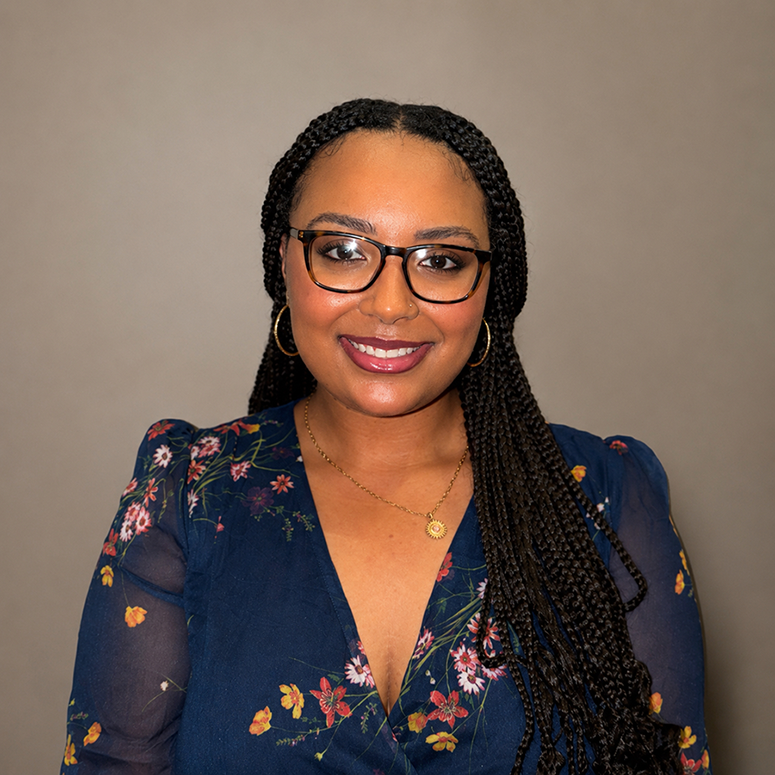
Layla DePrimo, who graduates in Fall 2026, plans to attend medical school in the Spring.Photo Submitted by Layla DePrimo
L: For biology, my service learning is my ecology (BIOL 4254) class I am in right now. It's nice to know that our work is doing something and getting rid of these invasive species that are harming the swamp. It was [also] nice to experience other things. You meet new people and get new experiences that you wouldn't get if you had never taken [the service-learning class]. My favorite from my interdisciplinary studies is KIN 3605: Health and Aging Process, and for that one, my service learning was having my grandfather learn the Lucid app, which follows his nutrition and things. And it was to help someone with the older generation learn something new. I taught him how to use this app to be able to track his macros to be a little bit healthier. Being able to learn through that experience at the same time as making memories of my grandfather, I really like because he's getting older. It's nice to have those memories that I wouldn't have. I mean, I help him all the time, but to be sitting there and say 'we actually need to do this, even though you're kind of stubborn sometimes.'
C: In BIOL 4254, you said you guys go and pull invasive species. Can you go into more detail about that?
L: We had to test the height of the taro, and which one is going to grow faster. There were two sections that were blocked off, and it was a control that we didn't move at any time. And for the first one, we had to cut it but not take the root out. And then the second one, we had to pull the root out to see. Last week, we went back and counted how many taros were there and how many other species were in a certain quadrant and measured how high it was. Because the taro is overpopulating the swamp, and it's not a native species to it; it’s stopping other species from being able to grow because it's just so much there.”
C: Where do you guys do that?
L: The Bluebonnet Swamp. It is around 15-20 minutes away. Actually, I never really knew it existed until the class. The first time I went there, it had just rained, so the water was so high. It was actually terrible. I am not really a muddy outside person, unless I am on a 4-wheeler, but to just be walking through the swamp with some high boots on, it was really interesting. Whenever we went by this week, it was very dry, so it was nice because we were able to see everything without getting the full mud.
C: Have you noticed any changes in your attitude, perspectives, or skills due to your involvement with service learning?
L: Yes, definitely. I think that before, because I grew up in a small town, we were exposed to the same thing as everyone else. So, from doing service learning, I've had different service opportunities here and there. Like I said, some things I wouldn’t have ever thought about. When I took my KIN 4605 course (Habituating and Addictive Drugs in Our Culture), I did a service learning [contract option placement] with the Crisis Text Line, and that's a service opportunity that I never knew existed before. I saw commercials about it, but I didn't know that regular people like me could help. I want to go into medicine and become a doctor. So, being able to help people whenever they're most vulnerable--like being on the brink of suicide or just needing someone to talk to because they're so stressed--has made me more empathetic and [open to] seeing other perspectives that are out there.
C: What advice would you give to get students interested in taking service-learning courses in the future?
L: I definitely say do it. If you're someone who is not already in the [Engaged Citizen Program], you may think that it's extra work, and you don't want to do it because we're college students. A lot of us are already stressed out and doing so much on our plate. But I think that it definitely helps you grow as a person. It helps expose you to other things that you may or may not have known that you were interested in or knew that was out there.
Yeah, I say do it. Even if you don't want to necessarily join the Engaged Citizen Program at first, take one service-learning class and see if you like it. If you like it, take more.
And then you could also contract-option (or add S-L to) your classes if you have a professor that's willing to do that as well. So, don't sell yourself short. We're in college--take as many opportunities as you can. Expose yourself to as much as you can.


Dr. Emily Goldsmith
CCELL: What motivated you to offer English 2000: English Composition II as a service-learning class?
Emily: I've been thinking about service-learning for years because I had been teaching for a number of years prior as the instructor of record throughout my graduate school experience, both during my master's and Ph.D. programs. I had been thinking, 'how do I make service-learning work?' I had all these different ideas.
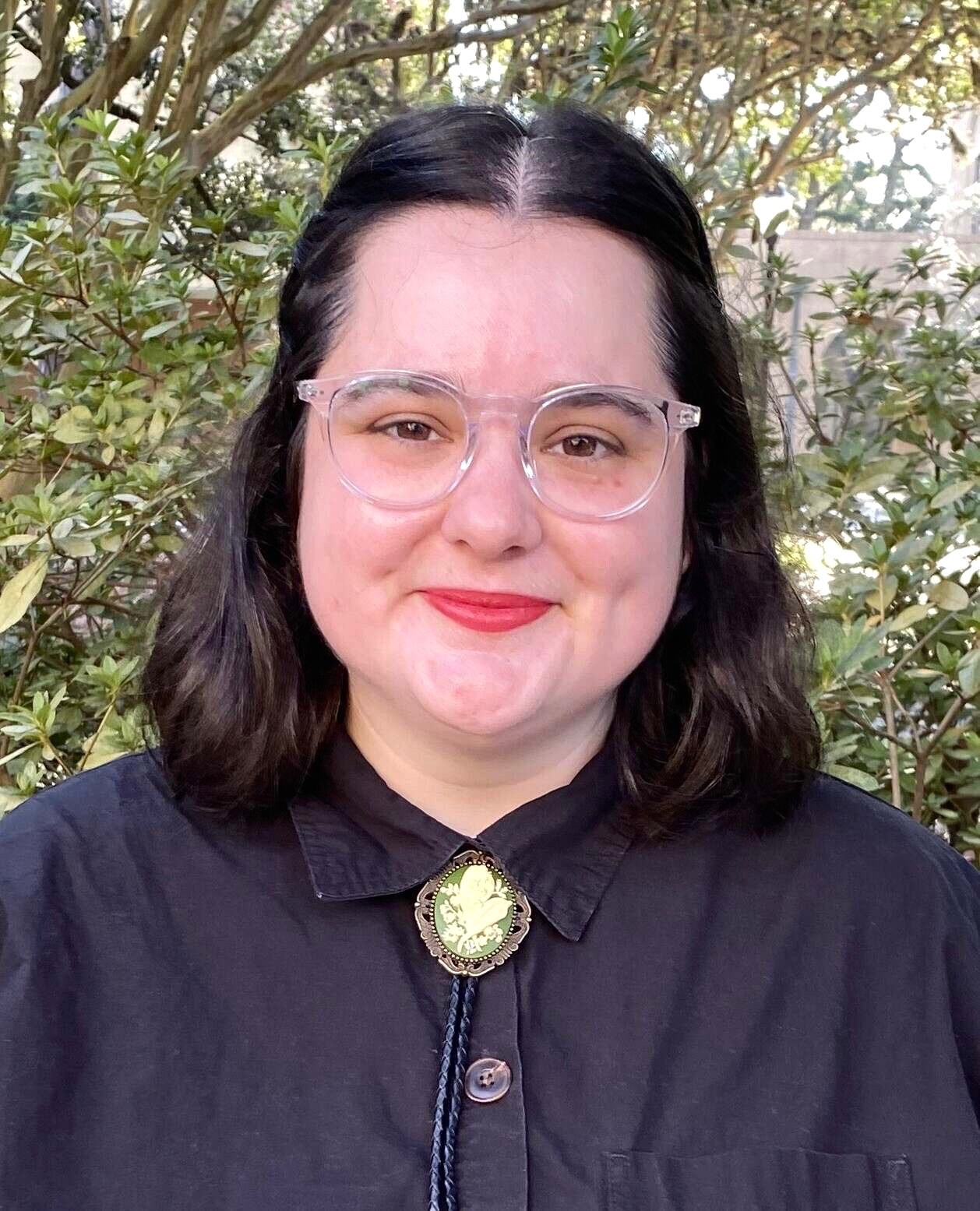
Dr. Emily Goldsmith has offered ENGL 2000: English Composition II as service-learning required since Spring 2026. Photo Submitted by Dr. Emily Goldsmith
When I got to LSU and [CCELL Director] Dr. Sarah Becker explained that she really wanted us to do this and that there was a center we could come talk to, I thought, okay. I've wanted to do this, and I've been trying to make it happen with no resources. Now, here's someone inviting me who has some resources. I have to jump in.
I wanted us to do something practically meaningful that was tied to my area of specialization so I could offer something unique. I think service learning can be tricky because you do want the learning part to happen. It can't be disconnected from the service, so I really had to think about how to make that happen. I also feel that sometimes, with each new semester, you get new students. You don't know who they are, where they come from, or what they think. Sometimes, you have to roll the dice on how much preparation or monitoring people will need. However, with the cemetery project, I was out there every time the students were out there. Also, in a cemetery, we're honoring the spirits of the people buried there, but they're not physically there anymore.
C: What are you most thankful for regarding your partnership with the West Baton Rouge Museum and the cemetery?
E: Mr. Clyde Robinson [of United Suns Protection Cemetery] and the West Baton Rouge Museum are awesome. The West Baton Rouge Museum is an incredible local resource. I would say that, although it's located in West Baton Rouge, it serves the greater Baton Rouge area, including both East and West Baton Rouge. They do such a great job with their educational programming as well. The museum itself is really interesting, its tours are great, and its rotating exhibits featuring local people are phenomenal. It's absolutely a community resource, but it's additionally a really valuable educational resource for us.
Angelique Bergeron [executive director of the WBR Museum] has stewarded relationships with lots of people in and around the community, and the museum has become such a positive presence. It's great to be able to partner with a person like Angelique, whom I respect and admire, but also with a museum that I feel is doing meaningful, valuable work at the intersection of education, community, and collaboration. That's really what I think is important about public history. It's about honoring the past and honoring the present while engaging with your local community and providing education.
C: How did you establish your relationship with the museum, and how did that connection help you get in touch with the cemetery you work with?
E: When I was looking for an East Baton Rouge cemetery that I could bring students to, I wanted to help and have us do something that would be practically useful. I reached out to Angelique, and I had also been talking to this woman in Baton Rouge first, but then she passed away. She was 88. That was the woman who organized the Lutheran Benevolence Society, Miss Lilly Petig Alligher. So, then I called Angelique and asked, 'Do you know anyone?' There's a woman in West Baton Rouge Parish named W. Martin who works with cemeteries.
First, I got connected to her, and through her, I got connected to Mr. Robinson, who is the person who really takes care of the United Suns Protection Cemetery in Port Allen. That's the cemetery we ended up working with. Of course, he does have a family connection to the cemetery, but it's kind of like just him, and he's an older man. He really does take care of it on his own. Sometimes local people or members of the church help, but it's a lot to take care of cemeteries in South Louisiana because you're fighting nature. We know things grow really fast here. Plus, we have natural disasters and rainstorms. Then we talked on the phone, and he was happy to have us come. That's how we got rolling.
C: Have you noticed any tangible results or changes in your student's attitude, skills, or behavior from participating in your service-learning course?
E: Well, I think we went out there, and they were ready to work. They were great. A number of them, especially those who were from Baton Rouge, were saying, 'Wow, I can do other things.' A couple of them said, 'Oh, I can volunteer.' They had these small revelations that were unique to them. They realized that they should or could volunteer in a different way. It crossed a barrier for them. Of course, some of them had individualized revelations about what we were doing, such as certain cemeteries being neglected. Some of them came from cultures outside of Louisiana that also value their dead. They were here thinking, 'I'm from a totally different place or even a different country, and I see how my culture is similar to this culture.' They were making those connections, which I always think is great. I think it's important for people to see themselves in others across borders, which are made up. I definitely saw that happen.
C: Would you recommend other faculty members to offer service-learning classes? And if so, how would you describe the benefits of providing the service-learning courses to them?
E: Yeah, with the caveat that at least what I'm doing does require a little more time on my part than a regular semester. But I would say that it's really worth it for a plethora of reasons. Part of it is that I'm also volunteering, so the little extra time for me, I'm not necessarily considering it work time. It's volunteering time, and I would volunteer somewhere else for hours in this quantity of time.
But I do think it's worth it because the ability to get to know your students, break down some of those hierarchical barriers that get in the way, have better discussions, and even connect the dots between what we're learning theoretically and practically is so good for student learning and cognition. For me, that is absolutely worth it. Plus, it's fun. It's enjoyable.
It's learning in a different atmosphere. It's nice to be outside and do things instead of just being in a classroom. So, I feel like not every person needs to do all the volunteer hours with their students. There are tons of ways to do service learning.


Dr. Angelique Bergeron
CCELL: What would you say the WBR Museum is most thankful for this year?
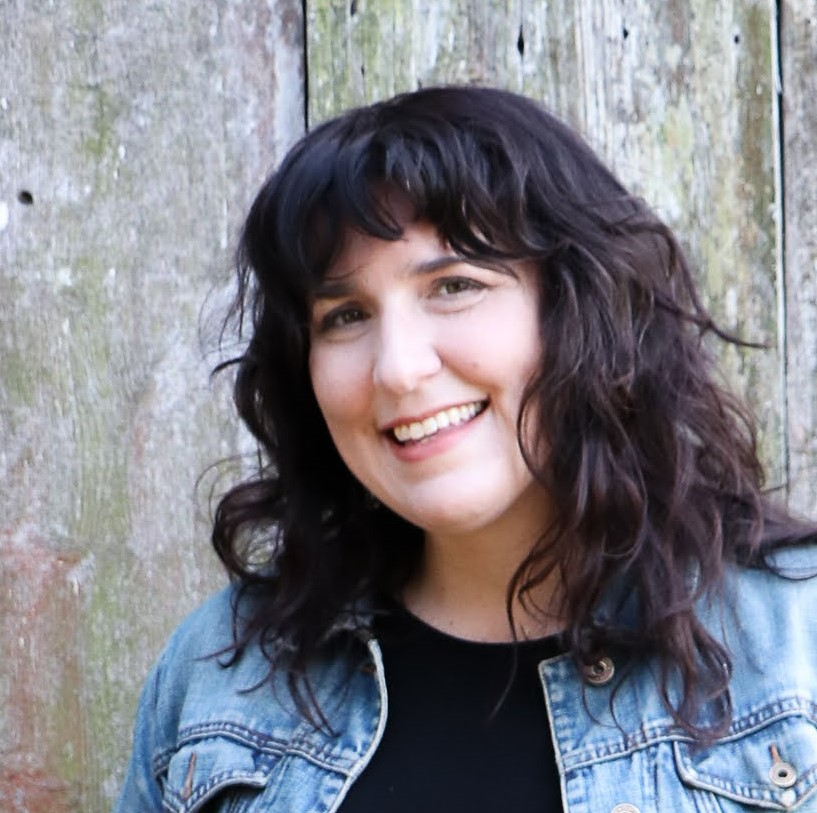
Dr. Angelique Bergeron serves as the executiver director at the West Baton Rouge Museum since 2017. Photo Submitted by Angelique Bergeron
Angelique: Definitely our community. We wouldn’t be here without community support in so many ways. I mean, financially, they support us with the village, but also just the community that comes out to our programs.
The exhibit that Emily brought her class over for was from a community member, who I recently hired at the Museum that had started over a decade ago. She's a genealogist and a researcher, just because it's what she loves doing. And she was going out into the endangered cemeteries of the area because, there are so many that were plantation cemeteries back in the day that are in cane fields that are being encroached on by the farming or being lost to the river or, neglected, as the elders in the community are unable to care for the graves. And so, Miss Debbie was going in and kind of volunteered her husband and her sons to help her clean up these cemeteries, too, so she could get back there and record all this information. It started with a database of all the names in the different cemeteries with the dates and everything she could find. And she started connecting a bunch of it.
After 10 years, she's got every cemetery in our parish mapped as much as she can and research done on as many folks as she can. But it turned into an exhibit. Emily has some similar overlapping research interests. She had asked if we would be their partner as she worked with our community. We have a benevolent society cemetery right down the road, and one of our board members, Mr. Clyde Robinson, is responsible for that cemetery. And so, these LSU students were going in and cleaning up and helping do some things with that benevolent society cemetery. This past spring semester, there is another exhibit that Emily is working on for us next fall that'll be on cemetery symbolism. So, we're looking very much forward to that. That should open September 2027.
CCELL: How long have you known Dr. Emily Goldsmith?
A: I met Emily a few years ago. They were doing a summer internship on the history of the New Orleans collection. And our research field is somewhat overlapped. Then Emily had come to us with an exhibit idea that was [aligned with] some research ideas that were very similar to an exhibit that we had opened in January of this year. And so, her service-learning class ended up being in collaboration with the "Gone but Not Forgotten: The Black Cemeteries of West Baton Rouge" exhibit.
CCELL: How has this partnership been mutually beneficial to you or the museum?
A: Getting LSU students across the [Mississippi] River to know what we have going on over here and the stories that we tell. It’s not easy work to get into these graveyards--the land is reclaiming spaces. And so, if we want to make them safe and accessible for the community, we need young volunteers as the caretakers of these cemeteries that are aging and unable to [maintain] these things.
CCELL: Have you seen students come to volunteer outside of their service-learning classes?
A: Yes, we have had lots of LSU students that have come and helped us with different things. Our big festival of the year, Sugar Fest, happens on the first Sunday in October, and we usually get some good volunteers from that. We've partnered with GeauxBig LSU, and they've helped us too. For example, we have eight historic structures, one of them is pre-civil war, but all these buildings need maintenance and care. Certainly, for our events, we've relied heavily on volunteers and have been fortunate to get some folks from LSU.
CCELL: Does the museum have any additional volunteer needs for the remainder of the Fall semester that you would like us to share?
A: We have our holiday open house on Friday, December 11th, from 6 to 8 p.m. And we'll have music and hot cider and gingerbread and stuff like that, but we have an elf hunt, a scavenger hunt and things for kids. And we always are looking for volunteers to help us man all those stations. We have lots of great programs going on all the time and I'm always looking for French-speaking volunteers and tour guides and things like that. We do a lot of Creole and French programming here as well.”