
NIH funding backs LSU Vet Med researcher exploring new ways to help the body fight deadly drug-resistant infections
July 08, 2026
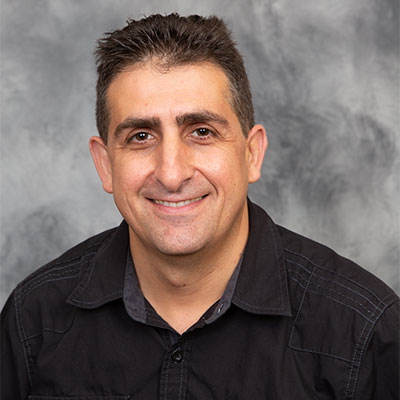
Assistant Professor Basel Abuaita
When dangerous bacteria invade the lungs, the body's first responders rush to the scene. Among the most important of these defenders are neutrophils, white blood cells that attack and destroy invading germs before they can cause serious harm. But sometimes, that’s not enough.
Basel Abuaita, Ph.D., assistant professor of infectious diseases at the LSU School of Veterinary Medicine, has received $3 million over a five-year period from the National Institutes of Health to uncover new ways to help the body fight deadly drug-resistant infections.
Research shows that these immune cells may have an unexpected ally: a cellular stress response system that helps neutrophils know when and how aggressively to fight.
Dr. Abuaita and his team are zeroing in on how a protein called IRE1α acts as a control center inside neutrophils during infections caused by methicillin-resistant Staphylococcus aureus (MRSA), a drug-resistant bacterium responsible for thousands of serious infections each year.
Antibiotic resistance is one of the world's most pressing public health challenges. Helping the immune system fight smarter—not just harder—could offer a promising new path for treating life-threatening infections.
“MRSA is particularly dangerous because it has developed resistance to many antibiotics. As antibiotic options become increasingly limited, our search becomes more important as we look for new strategies that don't target the bacteria directly but instead help the body's own immune system fight more effectively,” Dr. Abuaita said.
Previous studies revealed that IRE1α plays a critical role in helping the body clear MRSA infections. When neutrophils encounter bacteria, IRE1α activates a series of signals that boost the cells' ability to attack pathogens. One of the neutrophils' most powerful weapons is the release of neutrophil extracellular traps, or NETs—web-like structures that capture and kill bacteria.
While NETs can help eliminate infection, too much neutrophil activity can damage healthy tissue. In the lungs, excessive inflammation can lead to serious injury and make it harder for patients to recover.
The challenge for researchers is determining whether IRE1α's activation ultimately helps the lungs heal or contributes to harmful inflammation during severe infections.
To answer that question, the team will study how IRE1α controls key processes inside neutrophils, including the production of molecules that drive inflammation and the release of NETs. Using both human cells and animal models of MRSA pneumonia, they will examine how these responses affect lung damage and the body's ability to clear infection.
The findings could have implications far beyond MRSA. By revealing how the immune system's stress-response machinery controls infection-fighting cells, the research may identify new therapeutic targets that strengthen the body's natural defenses against antibiotic-resistant bacteria.