
Physics & Astronomy
Leading Discoveries Across Space, Time, and Matter
We explore the cosmos at every scale—from the smallest particles to the farthest galaxies—and turn curiosity into discovery. In our classrooms, laboratories, and observatories, ideas move freely across physics, astronomy, and applied science. Whatever sparks your curiosity, you’ll find the tools to explore it here at LSU.
50+
Faculty Members
130
Graduate Students
$10M+
Annual Grants and Contracts
From the Smallest Scales to the Largest Structures
Research that spans the Universe
At LSU, physicists explore the laws of nature across an extraordinary range of scales, from quantum matter and subatomic particles to stars, galaxies, and the cosmos itself.
Our faculty and students work across condensed matter and quantum materials, nuclear and high-energy physics, astrophysics and cosmology, medical physics, and computational science. Together, we pursue fundamental questions, develop new tools and technologies, and prepare the next generation of scientists.
IN THE NEWS
Research Highlights
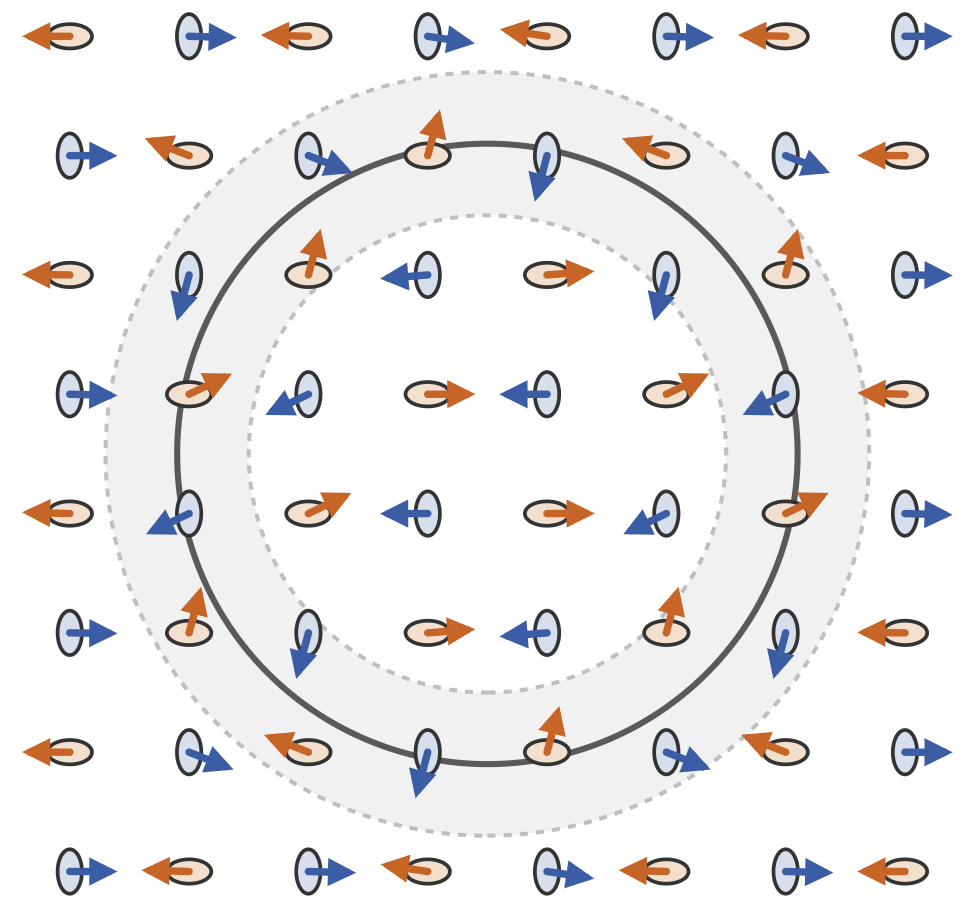
LSU physicist Constantin Schrade and collaborator Mathias S. Scheurer have developed a new theory for controlling how electrons move through altermagnets, an emerging class of magnetic materials. Their work shows that changing the material’s microscopic magnetic patterns could steer electrons in different directions depending on their spin. The findings give scientists new predictions to test and could eventually help researchers control how spin-based information moves through future electronic technologies.
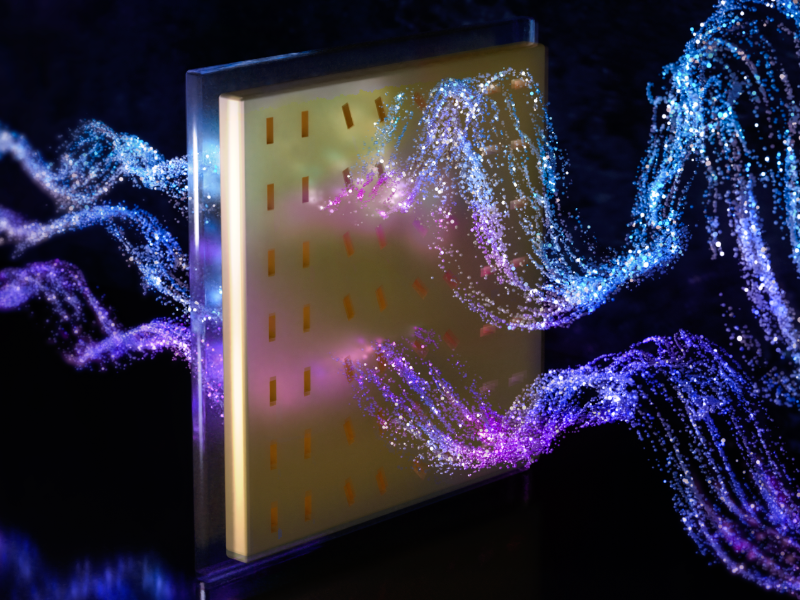
LSU physicists have developed the first room-temperature quantum material capable of distinguishing and transporting different quantum states of light. Published in Nature, the breakthrough establishes a blueprint for engineering future quantum materials that could advance quantum computing, secure communications, sensing technologies, and renewable energy.

LSU physicist Justin Wilson and collaborators have developed a new framework for controlling quantum chaos, adapting techniques originally designed for classical chaotic systems. The team showed that small, occasional corrections can stabilize unstable quantum states despite the constant fluctuations imposed by the uncertainty principle. Their work also revealed a sharp transition between controllable and uncontrollable behavior, uncovering universal rules that could help scientists protect and manipulate quantum information in future technologies.